
Introduction
The allure of the wilderness often conjures images of rugged survival, but it can also be a canvas for unexpected culinary artistry. Imagine the open air, the crackle of a fire, and the tantalizing aroma of perfectly cooked octopus, all achieved without the convenience of modern amenities. This isn’t just about cooking; it’s about connecting with nature, embracing resourcefulness, and transforming a humble ingredient into a gourmet experience, far from the grid.
Ingredients: Foraging and Resourcefulness
The heart of off-grid cooking lies in thoughtful ingredient selection and, where possible, foraging. While fresh octopus is the star, the supporting cast can often be found or cleverly adapted from what you have on hand.
-
The Octopus:
-
Source: Ideally, freshly caught (if you’re coastal and skilled) or responsibly sourced from a local market before your trip. Aim for a medium-sized octopus (1.5-3 lbs) as it’s easier to manage off-grid.
-
Preparation: If fresh, ensure it’s been properly cleaned (beak removed, ink sac and entrails discarded). If frozen, thaw it completely before your adventure.
-
Quantity: One medium octopus typically serves 2-4 people as an appetizer or light main.
-
-
Braising Liquid Aromatics:
-
Saltwater/Seawater (if available and clean): The ultimate off-grid seasoning.
-
Water: Your primary braising liquid.
-
Onion: A small to medium onion, roughly chopped.
-
Garlic: 3-5 cloves, smashed or roughly chopped.
-
Bay Leaves: 2-3 dried leaves.
-
Peppercorns: 10-15 black peppercorns, whole.
-
Wine (Optional but Recommended): A splash of dry white wine or even a robust red can add significant depth. Pack a small, sturdy bottle.
-
Lemon: 1-2 lemons, halved or quartered, for acidity.
-
-
Griddling Ingredients:
-
Olive Oil: A good quality, robust olive oil for searing. Pack in a leak-proof container.
-
Smoked Paprika: Adds a wonderful smoky depth that complements open-fire cooking.
-
Chili Flakes (Optional): For a touch of heat.
-
Fresh Herbs (Optional): If you’re lucky enough to find wild rosemary or thyme, fantastic! Otherwise, dried oregano or marjoram works well.
-
-
Tools & Equipment (Off-Grid Specific):
-
Heat Source: Campfire with a stable cooking grate, a portable charcoal grill, or a sturdy rocket stove.
-
Griddle Pan/Cast Iron Skillet: Essential for achieving that perfect sear. Cast iron holds heat beautifully.
-
Large Pot with Lid: For braising the octopus.
-
Tongs: Long-handled for safety over an open fire.
-
Sharp Knife: For preparation.
-
Cutting Board: A sturdy, packable one.
-
Heat-Resistant Gloves: For handling hot items.
-
Foil/Parchment Paper: For wrapping and cleanup.
-
Water Source: Potable water for cooking and cleaning.
-
How To Griddle Off-Grid Octopus: A Step-by-Step Guide
The secret to tender, flavorful griddled octopus is a two-stage cooking process: slow braising followed by a high-heat sear.
Step 1: The Braise – Tenderizing the Tentacles
This is the most crucial step for achieving that melt-in-your-mouth texture.
-
Prepare Your Fire: Get your campfire or stove going. You’ll need a consistent, medium heat for braising. For a campfire, this means allowing the flames to die down a bit, leaving hot embers, or positioning your pot slightly off the direct flames.
-
Combine Braising Ingredients: In your large pot, place the cleaned octopus. Add the chopped onion, smashed garlic, bay leaves, peppercorns, lemon halves, and optional wine. Pour in enough water (or clean seawater) to just cover the octopus. A pinch of salt is advisable, but remember if using seawater, adjust accordingly.
-
Slow Simmer: Bring the liquid to a gentle simmer. Once simmering, reduce the heat as much as possible to maintain a very low, slow cook. Cover the pot with its lid.
-
Braise Until Tender: Cook for 45 minutes to 2 hours, depending on the size and age of the octopus. Young, smaller octopus will cook faster. You’ll know it’s ready when a knife or fork easily penetrates the thickest part of a tentacle. It should be very tender but not falling apart.
-
Off-Grid Tip: If cooking over a campfire, you may need to periodically add small pieces of wood to maintain a consistent heat, or adjust the pot’s position on the grate.
-
-
Cool in Liquid: Once tender, remove the pot from the heat and allow the octopus to cool completely in its braising liquid. This helps it absorb more flavor and stay succulent. This step can be done hours in advance.
Step 2: The Griddle – Achieving Crispy Perfection
This is where the magic happens, giving the octopus its signature char and flavor.
-
Prepare the Octopus: Once cooled, carefully remove the octopus from the braising liquid. You can pat it dry gently with a clean cloth or paper towel. At this stage, you can cut the individual tentacles from the body, or leave it whole if you prefer a more dramatic presentation.
-
Heat the Griddle: Place your cast iron griddle pan or skillet over a high heat source on your campfire or stove. You want it screaming hot. A few drops of water should evaporate instantly.
-
Season the Octopus: Lightly brush the octopus tentacles with olive oil. Sprinkle generously with smoked paprika, and a pinch of chili flakes if using. You can also add a touch more salt and pepper here.
-
Sear on the Griddle: Carefully place the seasoned octopus tentacles onto the hot griddle. Don’t overcrowd the pan; cook in batches if necessary to maintain high heat.
-
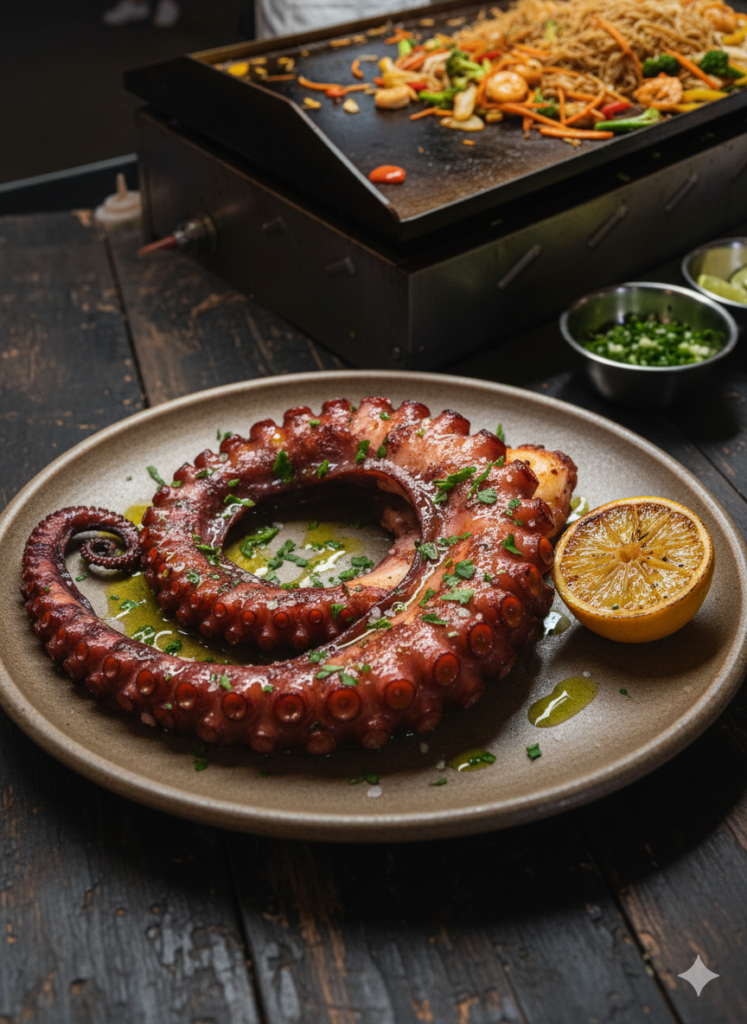
Achieve a Beautiful Char: Sear for 2-4 minutes per side, pressing down lightly with tongs, until the tentacles develop a beautiful, slightly crispy, charred exterior. The suction cups should become delightfully crispy.
-
Rest and Serve: Once perfectly seared, remove the octopus from the griddle and let it rest for a minute or two. This allows the juices to redistribute.
You Must Know: Essential Off-Grid Octopus Wisdom
-
The Pound for Tenderness: Many believe that freezing octopus first (even if buying fresh) helps break down the fibers, contributing to a more tender end product. If you have the luxury of planning, freeze your octopus for a few days before thawing and cooking.
-
The Cork Myth: The old wives’ tale of adding a wine cork to the braising liquid for tenderness is a myth. It’s the slow, gentle braising that does the work.
-
Don’t Rush the Braise: This is not a quick meal. Patience during the braising phase is paramount. An under-braised octopus will be tough and rubbery.
-
High Heat for Griddling: Once braised, the griddle needs to be intensely hot to create that desirable crust without overcooking the already tender meat.
-
Managing Fire Temperature: This is perhaps the biggest challenge off-grid. Learn to read your fire. Hotter embers, closer to the coals, or direct flame for searing; cooler embers, higher on the grate, or off to the side for simmering.
-
Water Discipline: Water is precious off-grid. Use only what you need for cooking and a minimal amount for cleaning.
-
Leave No Trace: Pack out everything you pack in, including food scraps and used liquids.
-
Safety First: Always have a bucket of water or a shovel nearby for fire safety. Use appropriate tools and wear protective gear.
Topping Variations: Elevate Your Wild Octopus
Even off-grid, you can add simple, yet impactful, finishing touches.
-
Classic Lemon & Herb: A squeeze of fresh lemon juice immediately after griddling, along with a sprinkle of chopped fresh parsley (if you managed to pack some) or wild herbs you identify.
-
Smoky Vinaigrette: Whisk together olive oil, a splash of red wine vinegar, a pinch of smoked paprika, and a touch of finely minced garlic. Drizzle over the hot octopus.
-
Chili & Garlic Infusion: Briefly sauté some minced garlic and chili flakes in a tiny bit of olive oil over low heat until fragrant (don’t burn!). Spoon this fragrant oil over the griddled octopus.
-
Wild Greens Pesto (Foraging Bonus): If you’re knowledgeable about foraging, make a simple pesto from wild ramps, nettles (blanched first), or other edible greens, blended with olive oil, a pinch of salt, and maybe some foraged nuts if you’re truly adventurous.
-
“Campfire Aioli”: Whisk together mayonnaise (pre-packed), a crushed garlic clove, a squeeze of lemon, and a tiny bit of the octopus braising liquid for a smoky, creamy dipping sauce.
Make It A Meal: Off-Grid Pairings
Transform your griddled octopus from an appetizer into a satisfying wilderness meal.
-
Simple Grilled Vegetables: Skewer or directly grill sturdy vegetables like bell peppers, zucchini, or onion wedges alongside the octopus.
-
Foil-Packet Potatoes: Dice potatoes, toss with olive oil, salt, pepper, and herbs. Wrap tightly in foil and cook directly in the embers of your fire until tender.
-
Hearty Grain Salad: Pre-cook a grain like farro or quinoa at home. Off-grid, toss it with some pre-chopped sun-dried tomatoes, olives, and a simple vinaigrette. Add the griddled octopus on top.
-
Foraged Salad: If you’re confident in your foraging skills, a simple salad of edible wild greens dressed with olive oil and lemon makes a wonderfully fresh accompaniment.
-
Crusty Bread: A simple loaf of pre-packed crusty bread is perfect for soaking up the delicious juices. Briefly warm it on the griddle.
Pro Tips for the Off-Grid Chef
-
Pre-Prep is Key: Do as much cleaning, chopping, and measuring as possible before you leave home. This minimizes waste and effort in the wilderness.
-
Pack Smart: Use sturdy, leak-proof containers for all liquids and ingredients. Label everything.
-
Embrace Imperfection: Off-grid cooking isn’t about Michelin stars; it’s about flavor, experience, and adapting to your environment. Don’t fret if things aren’t “perfect.”
-
Taste as You Go: Always taste your braising liquid and adjust seasonings.
-
Cleanliness Matters: Maintain good hygiene, even in the backcountry, to prevent foodborne illness.
-
Leave Some Liquid: The leftover braising liquid is liquid gold! It can be used to add flavor to other dishes, rehydrate grains, or simply be enjoyed as a savory broth.
-
The “Squish” Test: When braising, don’t rely solely on time. Gently “squish” a tentacle between your tongs. It should feel soft and yielding.
-
Wind Management: Wind can wreak havoc on fire temperatures. Position your cooking area strategically or create a simple windbreak.
-
Charcoal as a Thermometer: For a charcoal grill, arrange coals to create hotter and cooler zones for better temperature control.
-
Don’t Over-Flip: When griddling, resist the urge to constantly flip the octopus. Let it develop a good sear on each side.
Recipe FAQs: Your Off-Grid Octopus Questions Answered
-
Q: Can I cook octopus without braising it first?
-
A: While possible (e.g., very young, small octopus quickly grilled), for the best, most tender result, braising is highly recommended, especially for larger pieces. Without it, you risk a chewy, rubbery texture.
-
-
Q: How do I know if the octopus is truly tender?
-
A: The best test is to gently pierce the thickest part of a tentacle with a fork or the tip of a knife. It should offer very little resistance and slide in easily.
-
-
Q: What if I don’t have a griddle pan?
-
A: A clean, well-seasoned cast iron skillet will work perfectly. You can also use a heavy-bottomed stainless steel pan if you have one sturdy enough for open-fire use. If all else fails, a very clean section of a sturdy grill grate can work, though you won’t get as much surface contact for char.
-
-
Q: Can I use dried herbs instead of fresh?
-
A: Absolutely! Dried herbs like oregano, thyme, and bay leaves are excellent and much easier to pack for off-grid cooking. Use about 1/3 the amount of dried herbs compared to fresh.
-
-
Q: How long can I keep the braised octopus before griddling?
-
A: Once fully cooled in its liquid, you can store the braised octopus in a sealed container in a cool place (a cooler with ice if available) for up to 2-3 days before griddling. The longer it sits in its liquid, the more flavor it absorbs.
-
-
Q: What do I do with the remaining braising liquid?
-
A: This flavorful liquid is excellent! You can filter it and use it as a base for soups, stews, or even to cook rice or grains, adding a wonderful seafood depth.
-
-
Q: Is there a way to speed up the braising process?
-
A: Not significantly for quality results. Slow cooking is key to breaking down the tough fibers. Trying to rush it will only result in tough octopus. Embrace the slow pace of off-grid cooking!
-
-
Q: How do I clean an octopus in the field?
-
A: If you’ve caught it yourself, you’ll need a sharp knife. Cut off the head just above the eyes (some people keep the head, but for griddling, tentacles are preferred). Squeeze out the guts from the body sac. Locate and remove the hard beak, usually found at the center where the tentacles meet. Rinse thoroughly with clean water. This is a task best learned before heading out into the wild!
-