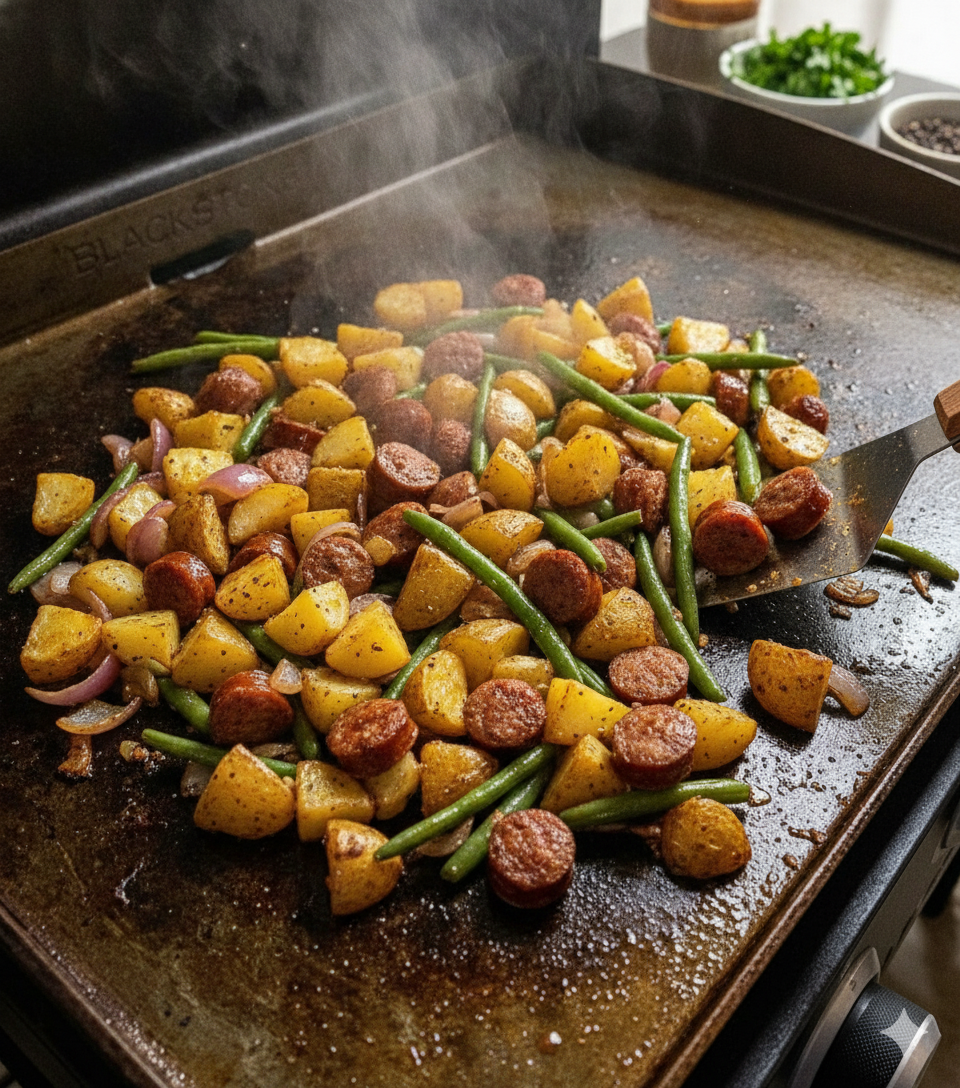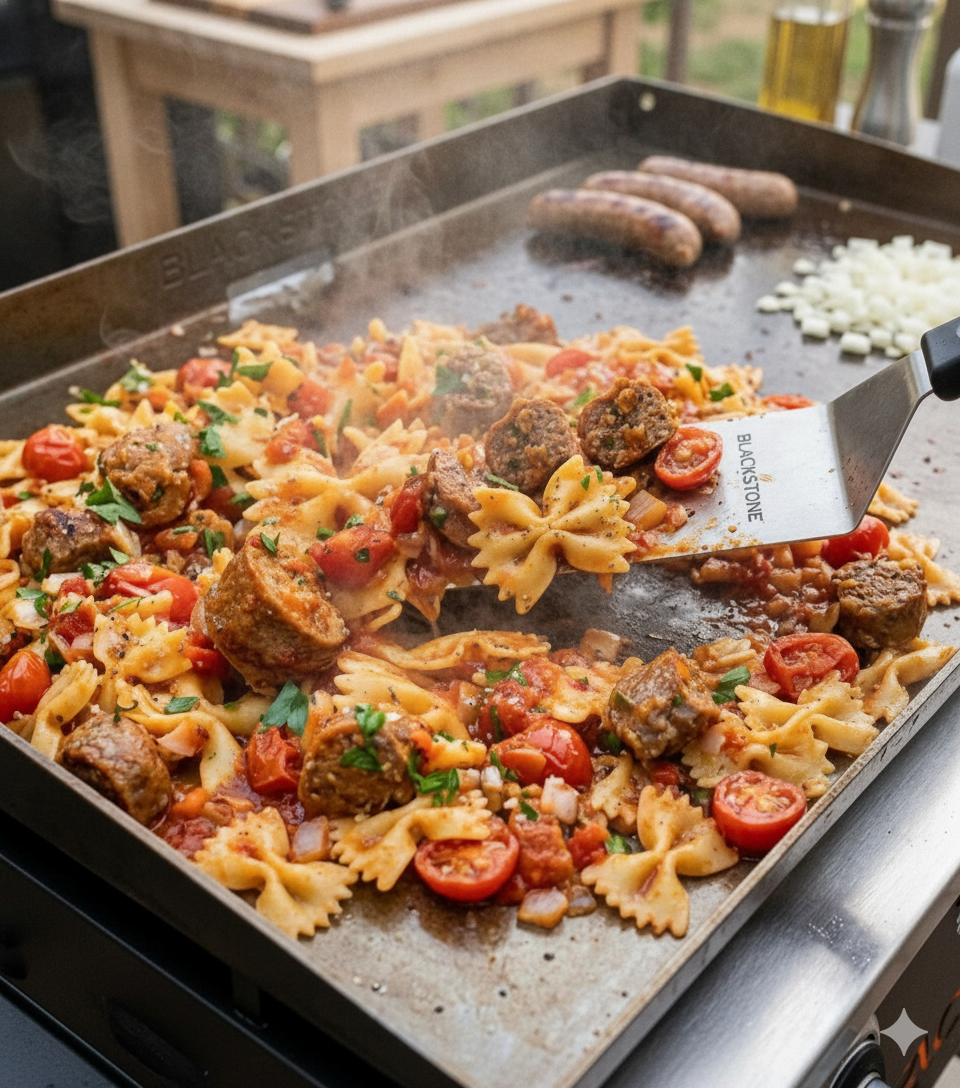
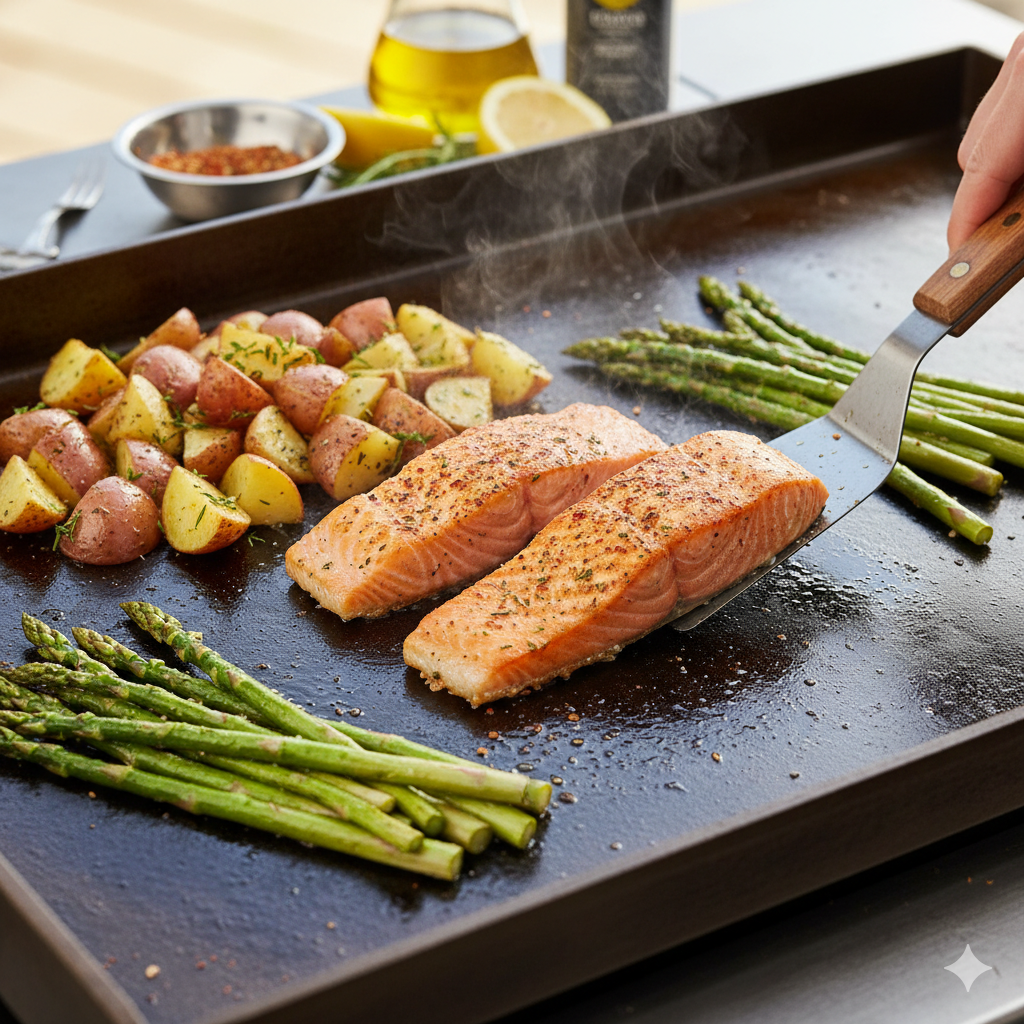

Imagine a delicious, healthy, and complete meal that comes together effortlessly, all on one cooking surface. That’s exactly what you get with Salmon with Asparagus and Baby Potatoes on the Blackstone griddle. This recipe transforms fresh salmon fillets, tender-crisp asparagus, and creamy baby potatoes into a culinary delight, infused with savory seasonings and a beautiful griddle-kissed char. The high, even heat of the Blackstone makes it incredibly easy to achieve perfectly cooked fish and vegetables simultaneously, making this an ideal dish for busy weeknights, impressive gatherings, or a delightful outdoor cooking experience.
Ingredients
To create this vibrant and flavorful meal, gather these fresh and high-quality ingredients.
For the Salmon:
-
2 (6 oz) salmon fillets: Skin-on or skin-off, wild-caught or farm-raised, based on your preference. Aim for fillets of similar thickness for even cooking.
-
1 tablespoon olive oil: For brushing the salmon.
-
1/2 teaspoon garlic powder:
-
1/2 teaspoon smoked paprika: Adds a lovely depth and color.
-
1/4 teaspoon salt: Or to taste.
-
1/4 teaspoon black pepper: Freshly ground preferred.
-
Lemon wedges: For serving.
For the Baby Potatoes:
-
1 lb baby potatoes: Such as red, yellow, or a medley. Halved or quartered depending on size.
-
1 tablespoon olive oil:
-
1/2 teaspoon salt: Or to taste.
-
1/4 teaspoon black pepper: Freshly ground.
-
1/2 teaspoon dried rosemary or thyme (optional): For aromatic flavor.
For the Asparagus:
-
1 bunch (about 1 lb) fresh asparagus: Ends trimmed, woody parts discarded.
-
1 tablespoon olive oil:
-
1/4 teaspoon salt: Or to taste.
-
1/8 teaspoon black pepper: Freshly ground.
-
1/2 teaspoon garlic powder (optional):
For Finishing/Garnish (Optional):
-
2 tablespoons fresh parsley or dill, chopped: For a burst of freshness.
-
2 tablespoons unsalted butter: For melting over the finished vegetables (optional, but adds richness).
How To Make Salmon with Asparagus and Baby Potatoes on the Blackstone Griddle
Cooking a complete meal on the Blackstone is efficient and delicious. Follow these steps to ensure each component is cooked to perfection.
Step 1: Prepare the Potatoes
-
Wash and Cut: Thoroughly wash the baby potatoes. Depending on their size, halve or quarter them so they are roughly uniform and bite-sized. Aim for pieces that are about 1 inch in diameter.
-
Par-Boil (Recommended): For best results and faster cooking on the griddle, par-boil the potatoes. Place the cut potatoes in a pot of cold, salted water. Bring to a boil, then reduce heat and simmer for 8-10 minutes, or until just tender-crisp (you should be able to easily pierce them with a fork, but they should still hold their shape).
-
Drain and Season: Drain the potatoes well and pat them dry with paper towels. Transfer to a bowl, toss with 1 tablespoon olive oil, 1/2 teaspoon salt, 1/4 teaspoon black pepper, and dried rosemary/thyme (if using).
-
Set aside: Have the seasoned potatoes ready to go on the griddle.
Step 2: Prepare the Asparagus
-
Trim Asparagus: Wash the asparagus spears. Snap off the woody ends – they will naturally break at the right spot.
-
Season: In a bowl, toss the trimmed asparagus with 1 tablespoon olive oil, 1/4 teaspoon salt, 1/8 teaspoon black pepper, and garlic powder (if using).
-
Set aside: Have the seasoned asparagus ready.
Step 3: Prepare the Salmon
-
Pat Dry: Pat the salmon fillets thoroughly dry with paper towels. This helps achieve a nice crust.
-
Season: Brush each salmon fillet with 1 tablespoon olive oil. In a small bowl, combine 1/2 teaspoon garlic powder, 1/2 teaspoon smoked paprika, 1/4 teaspoon salt, and 1/4 teaspoon black pepper. Sprinkle this seasoning mixture evenly over both sides of the salmon fillets.
-
Set aside: Your salmon is now ready for the griddle.
Step 4: Preheat and Cook on the Griddle
-
Preheat Griddle: Turn on your Blackstone griddle and set it to medium-high heat. Allow it to preheat thoroughly for 5-10 minutes. You want a consistent, hot cooking surface.
-
Add Potatoes First: Lightly oil the griddle surface (if not already seasoned). Spread the seasoned, par-boiled baby potatoes in a single layer on one section of the griddle. Let them cook for 8-10 minutes, stirring occasionally, until they are golden brown and crispy on the outside and fully tender inside.
-
Add Asparagus: After the potatoes have been cooking for about 5 minutes, add the seasoned asparagus spears to another section of the griddle. Cook for 5-7 minutes, turning occasionally, until tender-crisp and slightly charred in spots.
-
Add Salmon: Once the potatoes and asparagus are nearing completion (with about 5-7 minutes left for them), add the seasoned salmon fillets to a clean, well-oiled section of the griddle. If skin-on, place skin-side down first.
-
Cook Salmon: Cook the salmon for 3-5 minutes per side, depending on thickness, until it flakes easily with a fork and reaches your desired doneness (internal temperature of 145°F/63°C for medium). If skin-on, cooking skin-side down first for longer helps crisp the skin.
-
Step 5: Finish and Serve
-
Check Doneness: Ensure all components are cooked through. The salmon should be flaky, potatoes golden and tender, and asparagus tender-crisp.
-
Add Butter (Optional): If desired, add the 2 tablespoons of unsalted butter to the vegetables on the griddle and toss gently to coat before removing.
-
Remove from Griddle: Using spatulas, carefully transfer the cooked salmon, asparagus, and potatoes to individual plates or a large serving platter.
-
Garnish and Serve: Garnish generously with fresh chopped parsley or dill, and serve immediately with lemon wedges for squeezing over the salmon.
You Must Know
Achieving a perfectly cooked, flavorful meal on the Blackstone requires a few key insights. Understanding these can make all the difference in your results.
-
Pre-Cook the Potatoes (Par-Boil): This is the most crucial step for the potatoes. Baby potatoes take significantly longer to cook than salmon or asparagus. Par-boiling ensures they are already tender inside when they hit the griddle, allowing them to crisp up beautifully on the outside without the salmon overcooking or the asparagus becoming mushy. Skipping this step will result in undercooked potatoes.
-
Zone Cooking on the Griddle: The Blackstone griddle is excellent for cooking different components of a meal simultaneously because you can create temperature zones. Use a slightly hotter zone for the initial crisping of the potatoes and searing the salmon, and a slightly cooler zone for finishing the asparagus or keeping items warm.
-
Don’t Overcrowd the Griddle: Give each component space. Overcrowding reduces the griddle’s surface temperature, leading to steaming instead of searing and crisping, especially for the potatoes and asparagus. If necessary, cook in batches.
-
Pat Salmon Dry: Dry salmon fillets are essential for achieving a good sear and crispy skin (if skin-on). Excess moisture creates steam, preventing the fish from browning properly.
-
Skin-On vs. Skin-Off Salmon: If using skin-on salmon, cooking skin-side down first for the majority of the time will result in wonderfully crispy skin. If skin-off, simply cook evenly on both sides until done.
-
Doneness for Asparagus: Asparagus cooks quickly. You want it tender-crisp, with a slight bite, and perhaps a few charred spots for flavor. Overcooked asparagus becomes limp and soggy.
-
Fish Spatula is Your Friend: A thin, flexible fish spatula is invaluable for flipping delicate salmon fillets on the griddle without breaking them.
-
Lemon is Key: Fresh lemon juice brightens and enhances the flavors of both the salmon and vegetables. Don’t skip it!
Topping Variations
While the classic preparation is fantastic, you can easily customize your Blackstone salmon meal with various toppings and finishing touches.
-
Herby Butters:
-
Lemon-Dill Butter: Mix melted butter with fresh lemon juice and chopped dill to spoon over the salmon and vegetables after cooking.
-
Garlic-Herb Butter: Combine melted butter with extra minced garlic, parsley, and chives for an aromatic finish.
-
-
Sauces & Drizzles:
-
Balsamic Glaze: A drizzle of sweet and tangy balsamic glaze over the vegetables, or even the salmon, can add complexity.
-
Pesto: A dollop of fresh basil pesto on the salmon, or tossed with the potatoes, offers a vibrant, herbaceous flavor.
-
Romesco Sauce: For a smoky, nutty, and slightly spicy kick, a spoon of Romesco sauce alongside the salmon is excellent.
-
Creamy Dill Sauce: A simple mix of Greek yogurt or sour cream with fresh dill, lemon juice, salt, and pepper can be a light, refreshing accompaniment.
-
-
Nutty Crunch:
-
Toasted Almonds: Slivered almonds lightly toasted on the griddle or in a dry pan, then sprinkled over the asparagus.
-
Toasted Pine Nuts: For a buttery, Mediterranean touch, especially good with asparagus.
-
-
Spicy Kick:
-
Red Pepper Flakes: Sprinkle over the asparagus or salmon during the last minute of cooking, or add to the seasoning blend.
-
Sriracha Mayo: A drizzle of sriracha mixed with mayonnaise for a creamy, spicy sauce.
-
-
Cheese Finish (for vegetables):
-
Parmesan Cheese: A light grating of fresh Parmesan over the hot asparagus and potatoes just before serving adds a salty, umami kick.
-
Feta Crumbles: Crumbled feta can add a tangy, briny note to the vegetables.
-
Make It A Meal
This recipe is already a complete meal, but here are some ideas for how to adapt it, serve it, or expand on it for different occasions.
-
Hearty Weeknight Dinner: This is perfect as is. The lean protein, healthy fats, and ample vegetables make for a satisfying and nutritious meal without needing anything else.
-
Elevated Dinner Party Dish:
-
Serve on individual plates with a carefully arranged presentation.
-
Offer a side salad with a delicate vinaigrette.
-
Consider a light, crisp white wine (like Sauvignon Blanc or Pinot Grigio) pairing.
-
Finish with a light dessert like lemon sorbet or berries.
-
-
Meal Prep Option:
-
Cook a larger batch of salmon, asparagus, and potatoes.
-
Portion them into airtight containers for healthy lunches or dinners throughout the week. Reheat gently in the microwave or oven.
-
-
Grill-Out Feast:
-
Alongside this dish, you could also cook some grilled corn on the cob, a fresh caprese salad, or grilled fruit for dessert on the griddle.
-
-
Serve with a Grain (Optional): If you desire a more substantial meal or are feeding very hungry appetites, serve a smaller portion of the salmon and vegetables alongside a light grain like quinoa, couscous, or wild rice.
-
Sauce Bar: Offer a small “sauce bar” with a few of the topping variations (e.g., lemon-dill butter, sriracha mayo, balsamic glaze) so guests can customize their plates.
Pro Tips
Take your Blackstone griddle cooking to the next level with these expert tips for perfect salmon and vegetables.
-
Temperature Consistency for Salmon: Once the salmon hits the griddle, resist the urge to move it constantly. Let it sear for a good 3-4 minutes on the first side (skin-side down if applicable) to develop a beautiful crust and prevent sticking.
-
The “Push Test” for Salmon Doneness: Instead of just flaking, gently press down on the thickest part of the salmon with a fork or your finger. If it resists, it needs more time. If it flakes easily, it’s done. Overcooked salmon can be dry, so pull it off as soon as it’s ready.
-
Use Water for Griddle Cleaning: After cooking, while the griddle is still warm, squirt a little water onto the surface. The steam will help lift any stuck-on bits, making cleanup easier. Scrape with your griddle spatula.
-
Seasoning the Griddle: A well-seasoned griddle is naturally non-stick. Ensure your Blackstone is properly seasoned before cooking delicate items like fish.
-
Asparagus Squeak Test: Perfectly cooked asparagus will have a slight “squeak” when you bite into it. If it’s silent, it might be overcooked.
-
Oil the Griddle, Not Just the Food: In addition to oiling your food, lightly oiling the hot griddle surface just before adding each component (especially the fish) helps prevent sticking and promotes even cooking.
-
Don’t Forget the Salt: Salt draws out moisture and helps create that delicious crispiness on potatoes and the beautiful sear on salmon. Season generously but judiciously.
-
Rest the Salmon (Briefly): While not as crucial as resting steak, letting the salmon sit for 1-2 minutes after removing it from the griddle allows the juices to redistribute, resulting in a more succulent fillet.
Recipe FAQs
Here are answers to common questions about making Salmon with Asparagus and Baby Potatoes on the Blackstone Griddle.
Q: Can I use regular potatoes instead of baby potatoes?
A: Yes, but you’ll need to cut them into 1-inch pieces and par-boil them for longer (10-15 minutes) until tender-crisp. The cooking time on the griddle might also be slightly extended.
Q: How do I know when the salmon is cooked through?
A: Salmon is done when it easily flakes with a fork and has turned opaque throughout. An internal temperature of 145°F (63°C) is generally recommended for medium doneness. For juicier salmon, you might remove it a little before that, as it will continue to cook slightly with residual heat.
Q: What if I don’t want to par-boil the potatoes?
A: You can skip par-boiling, but the potatoes will take much longer to cook on the griddle (20-30+ minutes) and might not achieve the same crispy exterior and tender interior without potentially overcooking the other components. If you skip par-boiling, you’ll need to start them on the griddle much earlier and possibly cover them with a dome to trap heat.
Q: Can I use frozen salmon or asparagus?
A: Frozen salmon can be used, but ensure it’s fully thawed and patted very dry before seasoning and cooking. Frozen asparagus is generally not recommended for griddle cooking as it tends to become watery and mushy. Fresh is always best for both.
Q: How much oil should I use on the griddle?
A: For this recipe, a tablespoon or two of a high smoke point oil (like avocado or grapeseed oil) for the entire griddle should be sufficient. You want a light sheen, not a pool of oil. Your initial oiling of the food also contributes.
Q: Can I make this meal ahead of time?
A: This meal is best enjoyed fresh off the griddle. While leftovers are fine, the texture of the salmon and asparagus won’t be as good when reheated. You can prep all ingredients (wash, cut, season) ahead of time and store them separately in the fridge, then simply cook them when ready.
Q: My salmon is sticking to the griddle. What went wrong?
A: This usually happens for a few reasons:
* Griddle not hot enough (salmon needs to sear immediately).
* Not enough oil on the griddle or salmon.
* Trying to flip the salmon too early before a crust has formed. Let it cook undisturbed for the initial 3-4 minutes.
* Griddle not properly seasoned.
Q: How do I clean my Blackstone after cooking fish?
A: While the griddle is still warm, use your griddle scraper to push any food debris off the surface. You can then squirt a little water onto the hot griddle to create steam, helping to loosen any remaining stuck-on bits. Scrape again, then wipe clean with paper towels. A final light coating of oil helps maintain the seasoning.
Q: Can I use different seasonings for the fish or vegetables?
A: Absolutely! This recipe is very flexible. Try lemon-pepper, Creole seasoning, a simple herb blend (dill, parsley, chives), or your favorite fish rub for the salmon. For vegetables, Italian seasoning, dried oregano, or a touch of red pepper flakes would also be delicious.
Q: What is a good substitute for baby potatoes?
A: Small red potatoes, Yukon gold potatoes, or even sweet potatoes cut into 1-inch cubes would work similarly. Remember to par-boil them.